HOW MEDIATION WORKS
- Home
- HOW MEDIATION WORKS
A Clear, Structured Path Towards Resolution
Mediation can feel unfamiliar, particularly when you are dealing with an important family, commercial or workplace dispute. Our role is to make the process clear from the beginning, so you understand what to expect and what your role will be at each stage.

What Is Mediation?
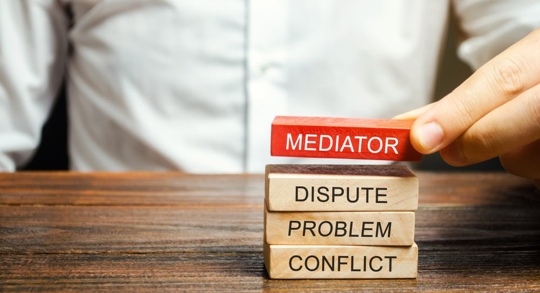
Mediation is a structured process in which an impartial mediator helps people in dispute communicate about the issues that matter to them and explore possible ways forward.
Unlike a court, the mediator does not decide the dispute. The participants remain responsible for deciding what they are, and are not, prepared to agree.
The mediator’s role is to facilitate the process, help participants identify and understand the issues, encourage constructive discussion and support them in exploring realistic options.
Mediation is participant-led. The mediator facilitates the process; the participants make the decision



Why Consider Mediation?
A Structured Process
Mediation provides a defined framework for discussing difficult issues rather than leaving communication to chance.
An Impartial Mediator
The mediator does not advocate for one participant against another.
Practical Solutions
Participants can explore solutions that take account of their particular circumstances and practical needs.
Greater Participant Control
The people involved remain responsible for deciding what they can agree.
Your Mediation Journey
- Step 1 — Initial Enquiry
- Step 2 — Suitability & Assessment
- Step 3 — Preparation
- Step 4 — Mediation Session
- Step 5 — Agreement & Next Steps
Contact us to discuss the nature of the dispute at a general level and find out more about the mediation process.
We consider whether mediation appears suitable and explain what happens next.
The participants and mediator prepare for the mediation, including identifying the issues that need to be addressed and agreeing practical arrangements.
Participants have an opportunity to discuss the issues, consider different perspectives and explore possible options with the mediator’s assistance.
Where participants reach agreement, the outcome and appropriate next steps can be considered.
What Does a Mediator Do?
The Mediator
Facilitates
Helps participants communicate constructively.
Clarifies
Helps identify the issues that need to be addressed.
Explores
Encourages participants to consider options and possible solutions.
Remains Impartial
Does not take sides or represent one participant against another.
Supports the Process
Encourages participants to consider options and possible solutions.Helps maintain a structured and respectful discussion.
The Mediator Does Not
Make the Decision
The mediator does not decide the outcome for the participants.
Act as One Party's Solicitor
The mediator does not represent one participant against another.
Force an Agreement
Participants decide whether they are willing to agree.
Guarantee a Result
Mediation cannot guarantee that a dispute will be resolved.
What Happens Before Mediation?
Good preparation can make mediation more effective. Before the session, the mediator will explain the process and consider whether mediation is appropriate in the circumstances.
Initial Contact
We gather basic information about the dispute.
Suitability
We consider whether mediation appears appropriate.
Practical Arrangements
We discuss participants, timing, location and other arrangements.
Preparation
Participants have an opportunity to prepare for the issues they want to discuss.
What Happens During a Mediation Session?
The mediator explains the process, confirms the ground rules and ensures everyone understands their role.
Participants’ Perspectives
Each participant has an opportunity to explain the issues from their perspective.
Identifying the Issues
The mediator helps identify the matters that need to be resolved.
Exploring Options
Participants discuss possible ways forward and consider different options.
Working Towards Agreement
Where possible, the participants develop practical proposals that they are prepared to consider.
What Happens After Mediation?
If agreement is reached
Where participants reach agreement, the outcome can be documented in an appropriate form and the participants can consider any further steps they may need to take.
If only some issues are resolved
It may be possible to record the areas of agreement while identifying the issues that remain outstanding.
If no agreement is reached
Mediation is not guaranteed to produce an agreement. Participants can consider their other options and, where appropriate, obtain independent legal advice about what to do next.
Is Mediation Right for Everyone?
Mediation is not suitable for every dispute or every participant.
The suitability of mediation can depend on factors such as the nature of the dispute, willingness to participate, safety concerns, significant power imbalances and whether meaningful communication is realistically possible.
An initial assessment can help determine whether mediation appears appropriate and whether any additional arrangements may be needed.
Frequently Asked Questions
Is mediation voluntary?
Does the mediator decide who is right?
What if we cannot agree?
Can I have a solicitor during mediation?
How long does mediation take?
Does mediation always take place in one session?
Is mediation confidential?
How do I start?
Ready to Find Out Whether Mediation Is Right for You?
Speak to PLB Mediation Services to discuss your circumstances and understand the next step.